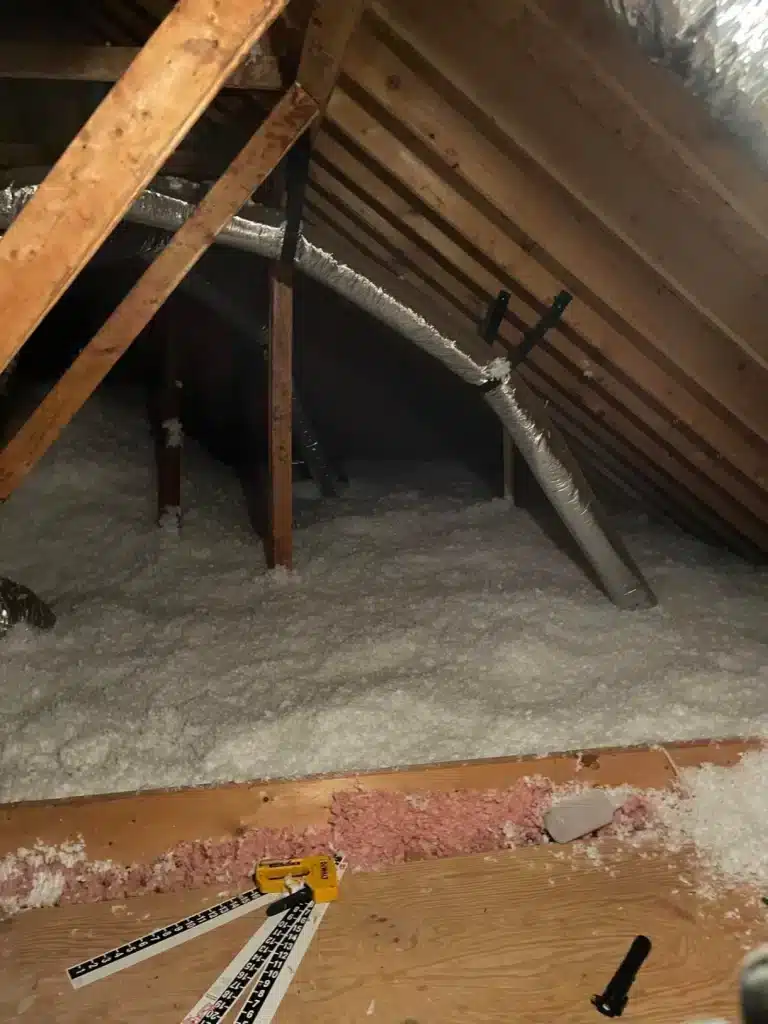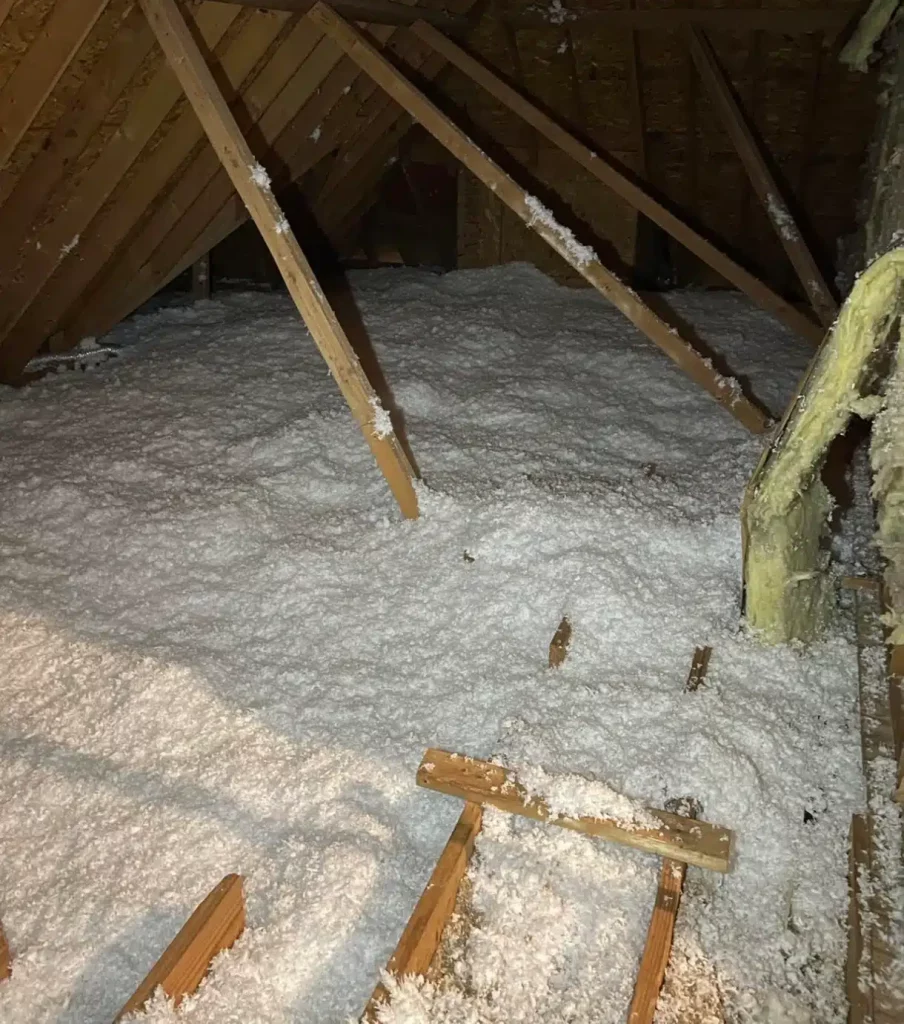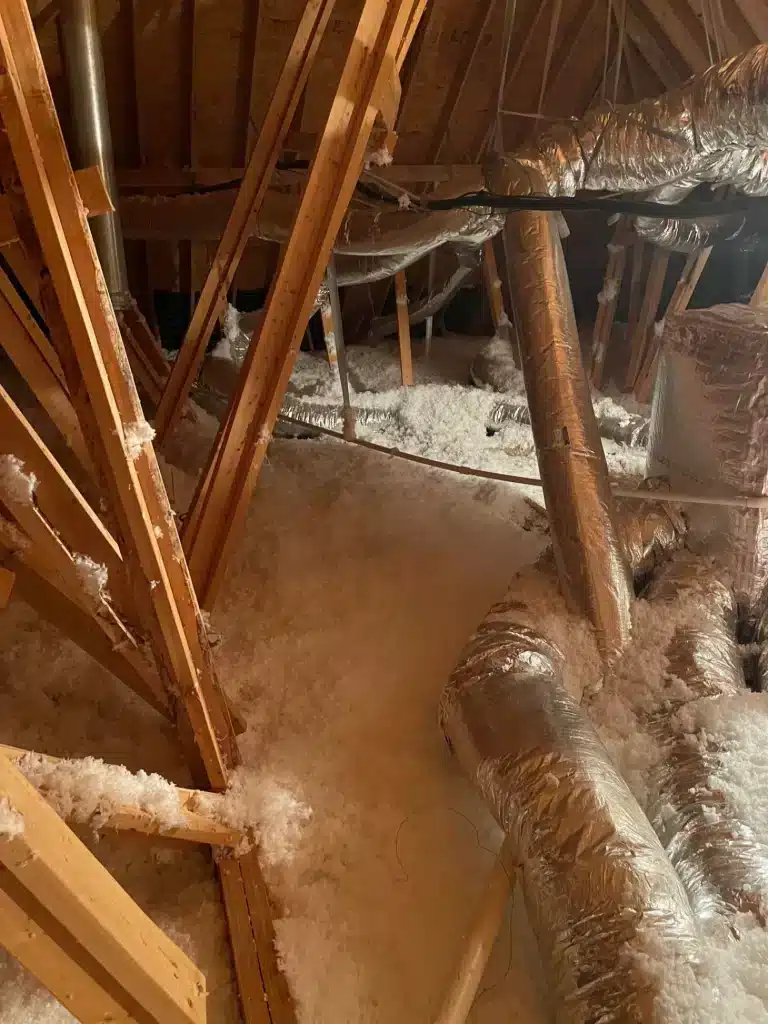

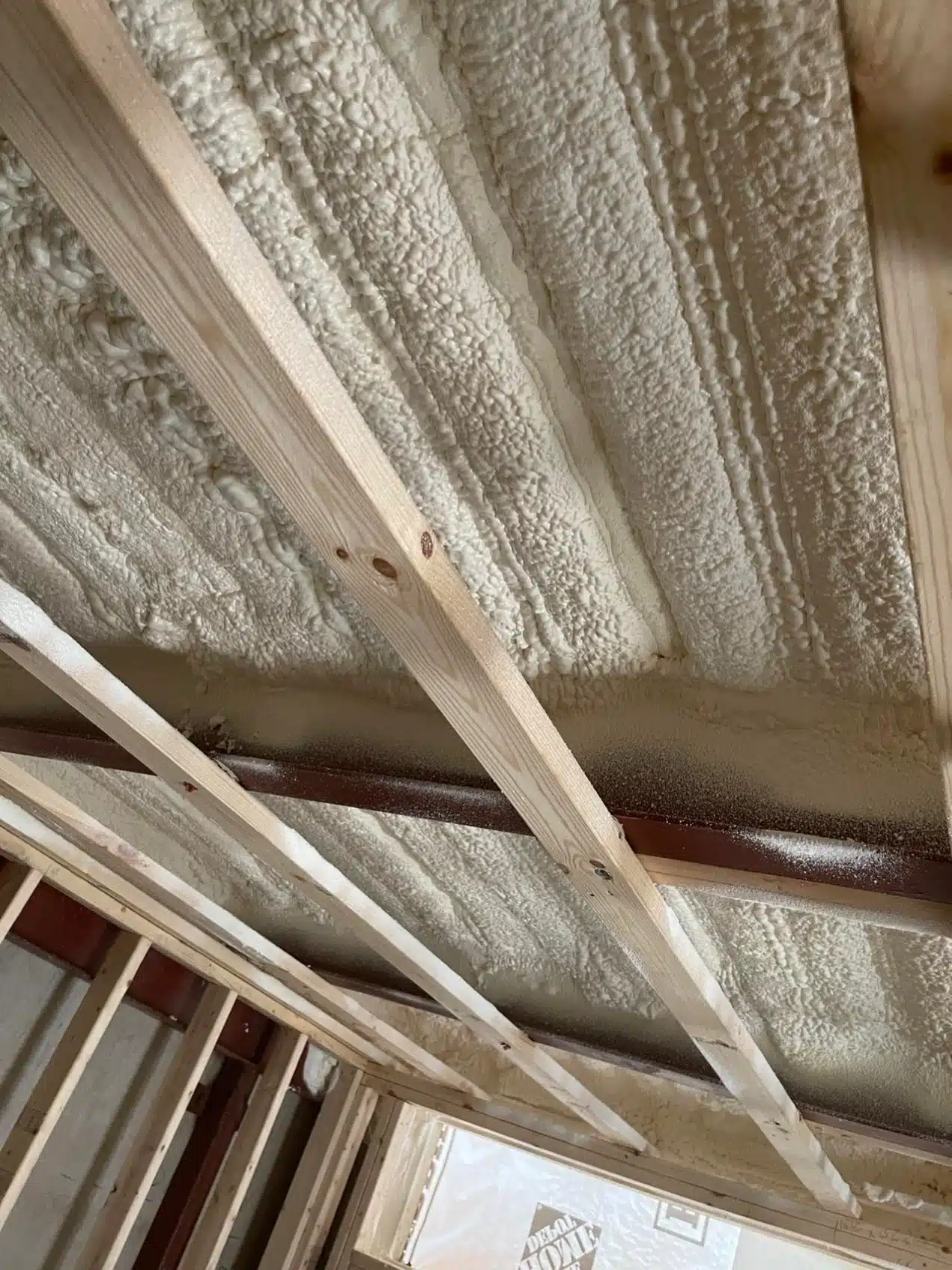
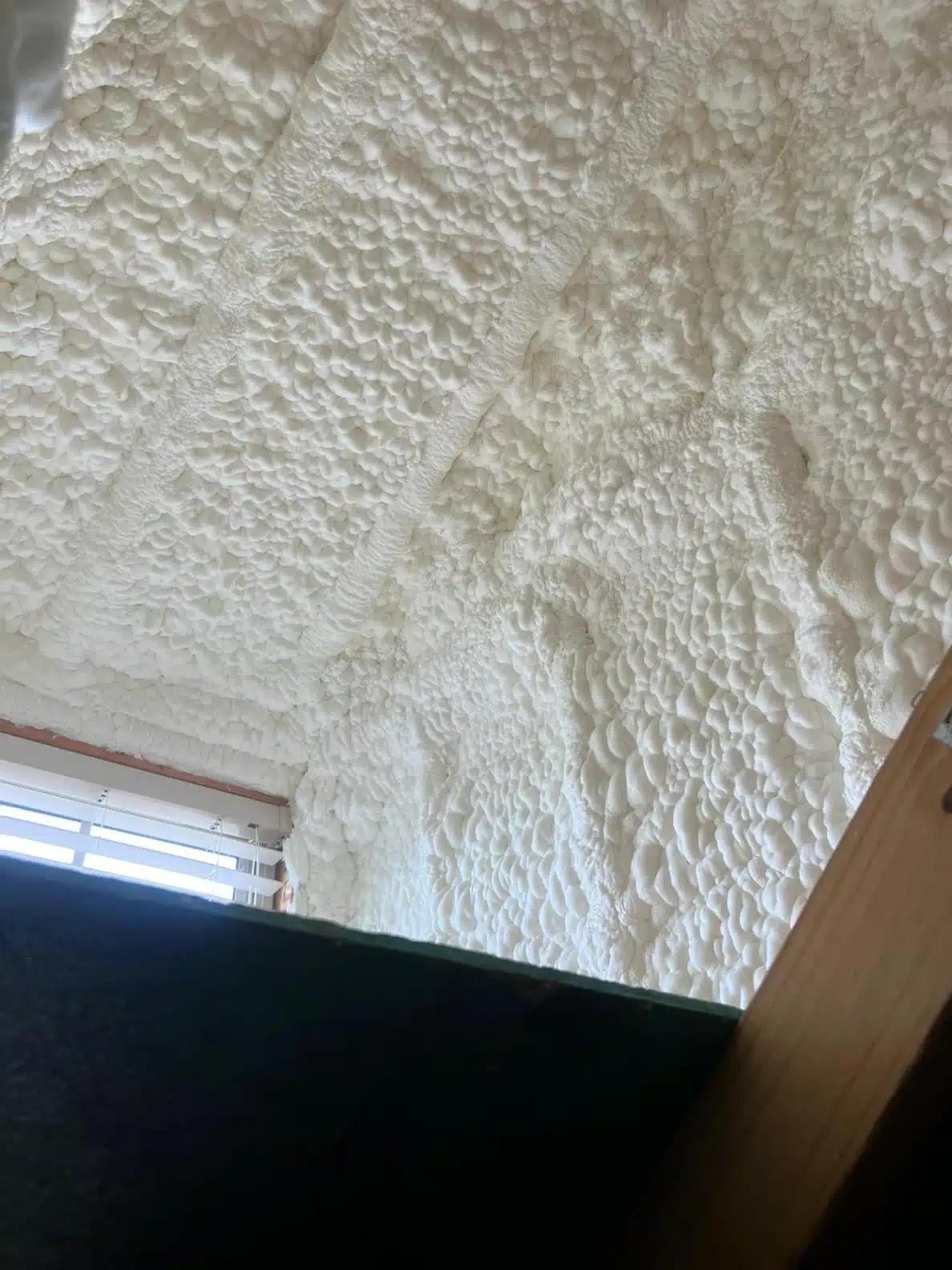
Spray foam insulation forms a continuous air barrier that fills cracks, gaps, and voids in walls, ceilings, and floors. This is especially important in older homes, where structural shifts and outdated materials often create unsealed openings. Unlike loose-fill or batt insulation, spray foam expands on contact, creating a tight seal that stops airflow.
The material’s high R-value and air-sealing capacity work together to reduce heat loss and infiltration. This lowers energy consumption, stabilizes indoor temperatures, and prevents common issues like drafty rooms and fluctuating thermostat readings. Based on field installation experience, older homes benefit significantly from spray foam due to their unpredictable framing and irregular cavities.
How Spray Foam Blocks Air Leakage
Expanding Seal That Adapts to Irregular Cavities
Older homes often contain non-standard framing and settling-induced gaps. Spray foam insulation expands to 30-60 times its liquid volume, adapting to the structure’s unique voids. This provides a customized seal without requiring major reconstruction.
Bonus Tip: Focus spray foam application on attic slopes and rim joists first these are typical high-leakage zones in older homes.
Air Sealing Performance Compared to Other Insulation Types
| Insulation Type | Air Sealing Effectiveness | R-Value per Inch | Suitable for Irregular Cavities | Moisture Barrier |
|---|---|---|---|---|
| Closed-Cell Spray Foam | Excellent | 6.0 – 7.0 | Yes | Yes |
| Open-Cell Spray Foam | Good | 3.5 – 3.8 | Yes | No |
| Fiberglass Batt | Poor | 2.9 – 3.8 | No | No |
| Blown-In Cellulose | Moderate | 3.2 – 3.8 | Partial | No |
| Rigid Foam Board | Good | 4.0 – 6.5 | No | Yes |
Regional Impact: Humid and Variable Climate Considerations
In the southeastern U.S., including Georgia, high humidity and seasonal shifts exacerbate the impact of air leaks. Older homes in this region tend to suffer from both condensation and draft issues. Closed-cell spray foam insulation not only seals air gaps but also functions as a vapor retarder, reducing risks of mold and wood rot.
Bonus Tip: Seal around plumbing penetrations and recessed lighting to reduce both moisture and air movement in humid areas.
Key Technical Attributes of Spray Foam Insulation in Older Homes
| Property | Closed-Cell Foam | Open-Cell Foam |
|---|---|---|
| Air Impermeability | <0.02 L/s·m² @75Pa | ~0.10 L/s·m² @75Pa |
| Vapor Permeance (perms) | 0.8 or less | 10 – 15 |
| Application Thickness | 1″ minimum | 3.5″ typical |
| Structural Rigidity | Adds stiffness | No added support |
| Sound Dampening | Moderate | High |
Practical Factors Before Choosing Spray Foam
- Accessibility: Exposed walls or open attics ease application.
- Historical Material Compatibility: Ensure foam doesn’t interact poorly with aged plaster or wood.
- Ventilation Requirements: Closed-cell foam can reduce air exchange—mechanical ventilation may be needed.
- Dry Time and Curing: Most spray foams cure within 24 hours but may release off-gassing during this period.
- Code Compliance: Some historic homes may require additional fire barrier coatings.
Bonus Tip: Consult blower door test results before and after installation to quantify air sealing performance.
Relevant Services Offered by Makeover Insulation
- Spray Foam Insulation Applied to attics, walls, and crawl spaces for superior air sealing and thermal resistance.
- Insulation Removal Safe extraction of outdated or damaged insulation before spray foam insulation application.
- Air Sealing Focused treatment of penetrations, rim joists, and framing intersections to support spray foam efficiency.
- Crawl Space Insulation Targeted foam application below the floor deck to block upward air movement.
Common Questions About Spray Foam Insulation in Older Homes
How does spray foam stop drafts in older homes?
Spray foam expands to fill cracks and gaps in aging structures, forming an airtight seal. This blocks outside air from entering and helps stabilize indoor temperatures, even in homes with irregular framing or settled foundations.
Is spray foam safe for use around old wood and electrical systems?
Yes, but precautions are needed. Spray foam bonds well to most older wood, but knob-and-tube wiring must be deactivated or replaced before installation to ensure safety and code compliance.
Can I apply spray foam over existing insulation in my attic or walls?
No. Existing insulation should be removed first. Spray foam needs direct contact with framing and surfaces to form an effective seal and deliver full performance benefits.
Evaluate Spray Foam Based on Your Home’s Needs
Spray foam delivers measurable improvements in comfort and efficiency when applied to older homes. The air-sealing capabilities outperform traditional materials, particularly in structures with uneven cavities and decades-old building envelopes. Prioritize areas with known leakage and consider compatibility with original materials before moving forward.
Learn more about how Makeover Insulation is expanding its services to support homeowners across new regions.
Talk to Makeover Insulation for Service Guidance
For targeted insulation solutions in older homes, contact Makeover Insulation. The team addresses structural variables, ventilation requirements, and energy goals specific to each property.
Phone: (404) 800-0300
Email: [email protected]
FAQS
Is spray foam safe for older wiring and wood?
Yes, but knob-and-tube wiring must be deactivated or replaced before foam is applied.
Can spray foam be applied over existing insulation?
No. Existing insulation should be removed to ensure full cavity adhesion and performance.
Will spray foam trap moisture?
Closed-cell foam resists moisture intrusion; proper ventilation ensures internal humidity balance.
Do all areas of an old home need spray foam?
Not always. Focus on high-loss zones first: attics, crawl spaces, and rim joists.