
Proper attic insulation serves as a thermal barrier, slowing the movement of heat between your home and the outside. However, its ability to protect against air infiltration, the uncontrolled flow of air through gaps and cracks, depends entirely on the type of insulation used and whether it’s paired with proper air sealing. Many traditional insulation materials, like fiberglass batts, primarily resist heat transfer but do little to stop air movement. A complete system often requires both a thermal barrier and a dedicated air barrier to manage energy loss and maintain comfort effectively.
This article explains the relationship between insulation and air infiltration, detailing how different materials perform and what a comprehensive solution looks like. The information shared here is based on extensive field experience helping homeowners address energy inefficiency and comfort issues. Understanding this distinction is key to creating a truly energy-efficient home.
The Difference Between Insulation and Air Sealing
Many people use the terms insulation and air sealing interchangeably, but they refer to two different functions that are both necessary for an efficient attic assembly.
Insulation’s job is to resist heat flow, which occurs in three ways: conduction, convection, and radiation. The effectiveness of insulation is measured by its R-value, with a higher R-value indicating better thermal resistance. Air sealing, on the other hand, is the process of finding and closing gaps in the building envelope to stop air from leaking in or out. According to the U.S. Department of Energy, these hidden air leaks are a major source of energy waste in many homes.
Uncontrolled air movement, driven by wind and pressure differences (often called the stack effect), allows conditioned air to escape and unconditioned air to enter. This forces your heating and cooling systems to work harder, increasing energy consumption and utility bills.
Comparing Insulation Materials as Air Barriers
Not all insulation materials are created equal when it comes to stopping airflow. Some materials are excellent insulators but poor air barriers, while others can perform both functions simultaneously. The right choice depends on the specific needs of the attic, budget, and performance goals.
Here is a general comparison of common attic insulation materials:
| Insulation Type | Primary Function | Air Barrier Effectiveness | Notes |
|---|---|---|---|
| Fiberglass Batts | Thermal Resistance | Low | Air moves easily through and around the batts if not installed perfectly. |
| Loose-Fill Cellulose | Thermal Resistance | Moderate | Denser than fiberglass, it slows airflow but does not stop it completely. |
| Loose-Fill Fiberglass | Thermal Resistance | Low to Moderate | Similar to cellulose but less dense; can be disturbed by airflow. |
| Open-Cell Spray Foam | Thermal & Air Barrier | High | Expands to fill gaps, creating an effective air seal. It is vapor permeable. |
| Closed-Cell Spray Foam | Thermal & Air Barrier | Excellent | Creates a rigid, dense air and moisture barrier. Offers a higher R-value per inch. |
As the table shows, materials like spray foam are inherently better at stopping air infiltration because they expand to create a continuous, monolithic seal across the attic floor or roof deck.
Why Air Sealing Is a Priority
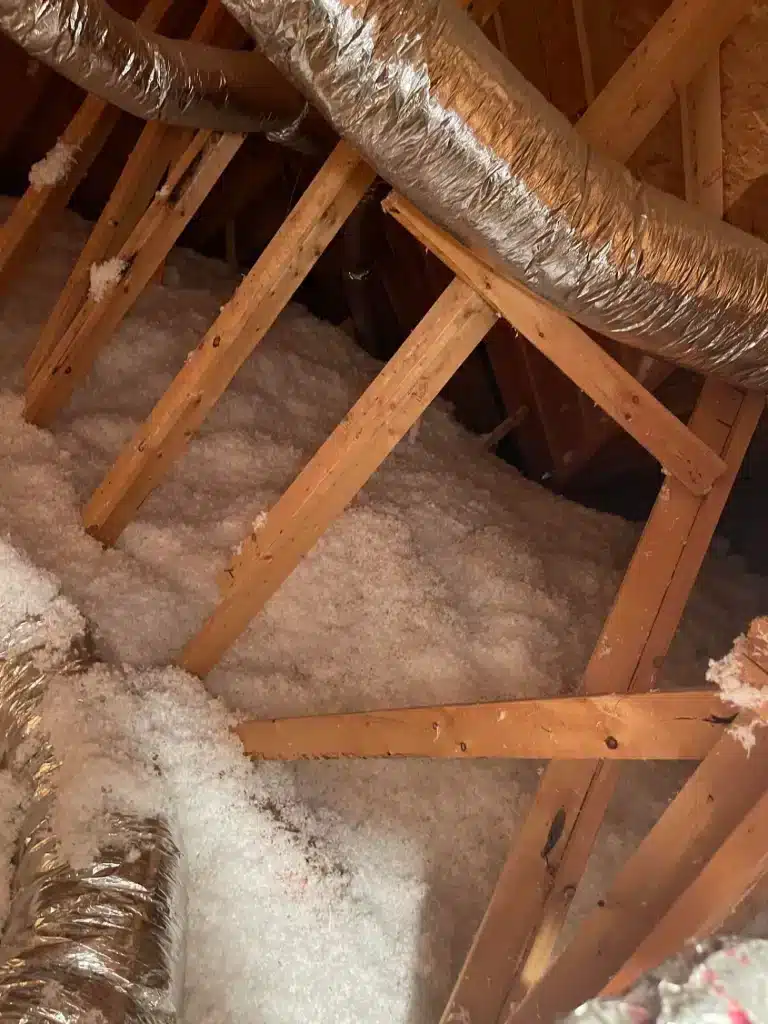
For insulation types that are not natural air barriers, like fiberglass or cellulose, a separate air sealing step is essential before installation. This involves using materials like caulk, canned spray foam, and weatherstripping to seal all the small and large gaps that connect the living space to the attic.
Common air leakage points include:
- Around plumbing pipes and electrical wiring
- Gaps around the attic access hatch
- Recessed light fixtures (unless they are ICAT-rated, meaning Insulation Contact Air Tight)
- Where interior walls meet the attic floor
Bonus Tip: Pay special attention to the top plates, which are the horizontal tops of the walls where they meet the attic floor. This long, linear gap is a major and often overlooked source of air leakage that should be sealed with foam or caulk.
Things to Consider Before Making a Decision
Choosing the right insulation and air sealing strategy for your attic involves more than just picking a material. Several factors will influence the best course of action.
- Your Climate Zone: The amount of insulation you need (R-value) is determined by your geographic location. A guide from ENERGY STAR provides recommendations for different regions, ensuring you don’t over-insulate or under-insulate.
- Ventilation Strategy: Your attic needs to breathe. Proper ventilation helps control moisture and temperature, extending the life of your roof. Any air sealing work must not block essential ventilation points like soffit and ridge vents. A balanced system includes a sealed attic floor and a well-ventilated attic space above the insulation.
- Existing Conditions: If you have old, compressed, or damaged insulation, it may need to be removed before new material is installed. Simply adding new insulation over failing material can trap moisture and hide bigger problems.
- Long-Term Goals: While materials like closed-cell spray foam may have a higher upfront cost, they can provide greater long-term energy savings because they act as an all-in-one thermal, air, and moisture barrier.
Final Thoughts
Protecting your home from air infiltration requires more than just spray foam insulation. It demands a systematic approach that combines a high-quality thermal barrier with meticulous air sealing. By stopping uncontrolled airflow, you not only lower your energy bills but also improve your home’s comfort, durability, and indoor air quality. Before starting any project, evaluate your home’s specific needs and consider how different materials will work together to create a complete and effective system.
Get a Professional Assessment
If you’re unsure where to start, a professional evaluation can pinpoint air leakage sources and determine the most effective insulation strategy for your home. For a detailed inspection and personalized recommendations, contact Makeover Insulation LLC. You can reach the team by phone at (404) 800-0300 or by email at [email protected] to discuss your home’s specific needs.
Sources
- U.S. Department of Energy – Provides comprehensive information on air sealing techniques and their impact on home energy efficiency.
- ENERGY STAR – Offers official recommendations for insulation R-values based on climate zones across the United States.
- Spray Polyurethane Foam Alliance (SPFA) – An industry organization providing technical details on the properties of open-cell and closed-cell spray foam, including their functions as air and vapor barriers.
FAQS
What is the difference between an air barrier and a vapor barrier?
An air barrier’s purpose is to stop the movement of air. A vapor barrier, or vapor retarder, is designed to slow the movement of water vapor. Some materials, like closed-cell spray foam, can function as both. The Spray Polyurethane Foam Alliance explains that closed-cell foam’s structure makes it resistant to both air and water vapor transmission.
How can I tell if my attic has air leaks?
On a cold day, you might see frosty areas on the attic side of the roof sheathing, indicating warm, moist air is escaping from below. Other signs include dusty or dirty patches in your existing insulation, which marks a spot where air is filtering through. A professional energy audit using a blower door test is the most accurate way to find leaks.
Is closed-cell or open-cell spray foam better for attics?
Both are effective air barriers. Closed-cell foam offers a higher R-value per inch and acts as a vapor retarder, making it a good choice for roof deck applications where moisture control is a concern. Open-cell foam is less dense, provides sound dampening, and is often used on the attic floor. The best choice depends on the specific attic design and climate.
How does air infiltration affect indoor air quality?
Air leaking in from attics, crawlspaces, or garages can carry dust, insulation fibers, moisture, and other contaminants into your living space. By air sealing these areas, you gain better control over your indoor environment, which can be especially beneficial for people with allergies or asthma.
.