
Spray foam insulation must meet strict fire safety standards due to its chemical composition and placement within residential and commercial structures. The two primary concerns involve flame spread and smoke development. These standards are governed by the International Building Code (IBC), International Residential Code (IRC), and specific ASTM test methods, most notably ASTM E84. Understanding compliance requirements ensures the material will not contribute dangerously to fire propagation or toxic smoke during a fire event.
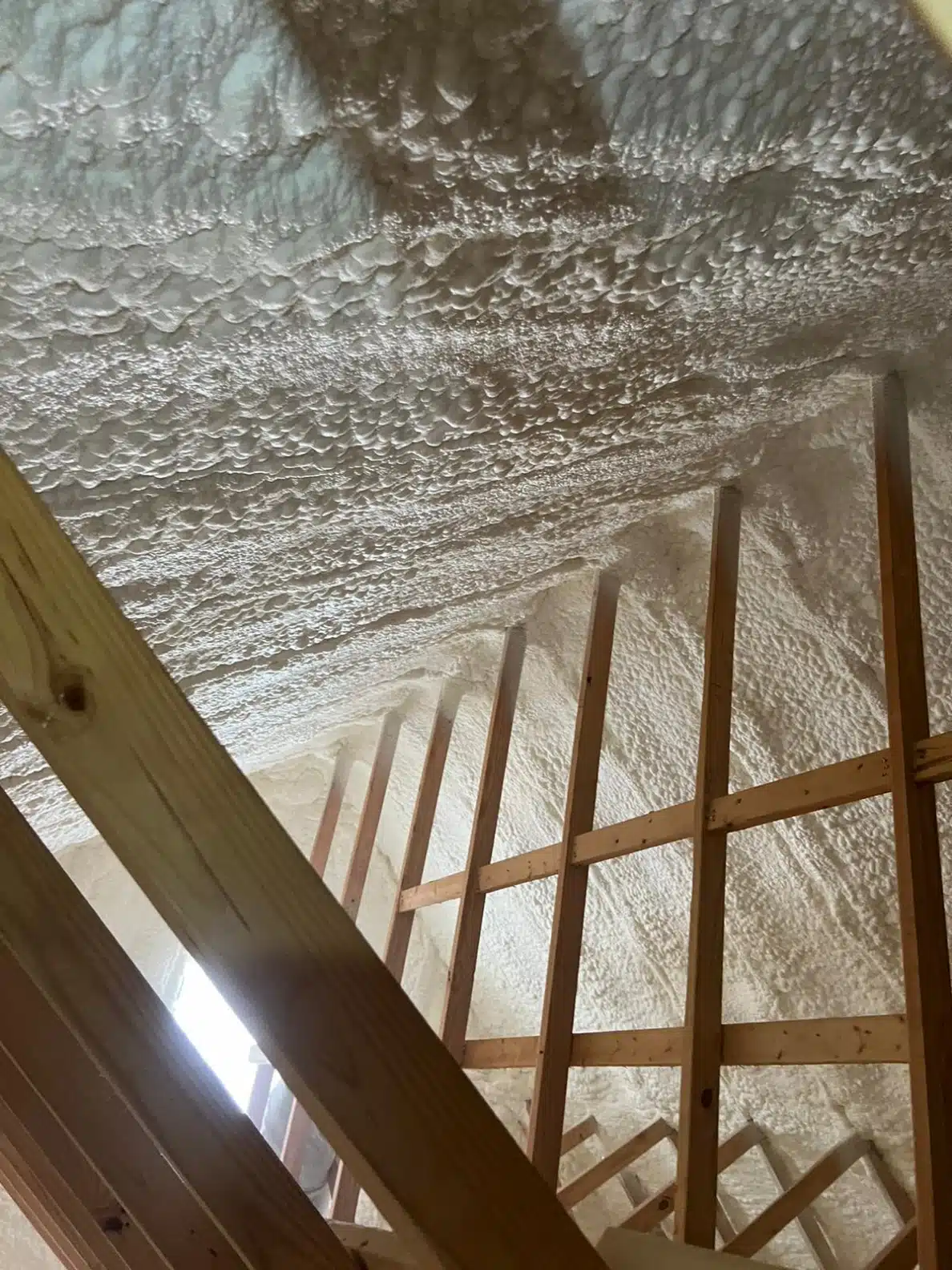
Spray foam, while highly efficient as an air barrier and insulator, requires protective measures like thermal or ignition barriers. These coatings slow down heat transfer and delay ignition. Application without these precautions is considered a fire hazard, especially in attics, crawl spaces, or behind walls. This article outlines critical safety guidelines, classification systems, and technical insights based on Makeover Insulation’s experience across Georgia’s residential and builder projects.
Fire Safety Ratings and Codes That Govern Spray Foam
Understanding Core Rating Tests
Spray foam insulation must be tested under ASTM E84 (also known as the Steiner Tunnel Test). This evaluates two primary factors:
| Test Parameter | Description |
|---|---|
| Flame Spread Index (FSI) | Measures how quickly flame travels over a material’s surface (0-25 = Class A) |
| Smoke Developed Index (SDI) | Indicates the volume and density of smoke produced during combustion |
| Thermal Barrier Requirement | Minimum 15-minute protection against direct flame (typically using drywall) |
| Ignition Barrier Requirement | Slows initial flame exposure, common in unoccupied areas (e.g., attics, crawl spaces) |
Classification Summary (Per Code Requirements)
| Foam Class Type | Flame Spread Index | Smoke Developed Index | Acceptable Use Areas |
|---|---|---|---|
| Class A | 0 – 25 | < 450 | Residential, commercial |
| Class B | 26 – 75 | < 450 | Limited-access, restricted areas |
| Non-rated | > 75 | > 450 | Not compliant for exposed use |
Bonus Tip: Application inside attics or crawl spaces must include ignition barriers like intumescent paint or mineral board unless specifically exempt under building codes.
Material Behavior in Fire Conditions
Spray foam will begin to degrade when exposed to temperatures around 250°F to 300°F. While it can self-extinguish once the ignition source is removed (closed-cell foams), it can still emit toxic fumes like carbon monoxide and hydrogen cyanide if burned.
| Foam Type | Initial Decomposition Temp | Toxic Emissions When Burning | Self-Extinguishing |
|---|---|---|---|
| Closed-Cell | 250°F – 300°F | CO, HCN | Yes |
| Open-Cell | 180°F – 220°F | CO, HCN, hydrocarbons | Partially |
Regulatory Oversight and Industry Standards
Spray foam must comply with:
- ASTM E84: Flame and smoke indices
- NFPA 286: Room corner burn tests for thermal barrier exemptions
- IBC/IRC Sections R316 & R302: Requirement of ignition or thermal barriers
- Local amendments: Some jurisdictions (like in Georgia) adopt stricter codes in hot-humid or mixed-humid climates
According to ICC Evaluation Services, only foams with approved third-party evaluation reports (e.g., ICC-ES or UL listings) may be installed without further testing. Contractors must reference these documents during inspections.
Bonus Tip: Request product documentation before installation. Confirm the ICC-ES or UL report number matches the product label.
Conditions That Affect Fire Safety Compliance
Several environmental and construction factors influence whether spray foam installations remain code-compliant:
- Unvented Attics: Require additional ignition barrier protection
- Climate Zones 2-4 (e.g., Georgia): Moisture and temperature swings raise ignition barrier relevance
- Framing Cavities: Enclosed cavities may allow for limited spray foam exposure without thermal barriers if compliant under specific test protocols
- Occupancy Classification: Commercial and multifamily dwellings have stricter fireproofing and barrier requirements
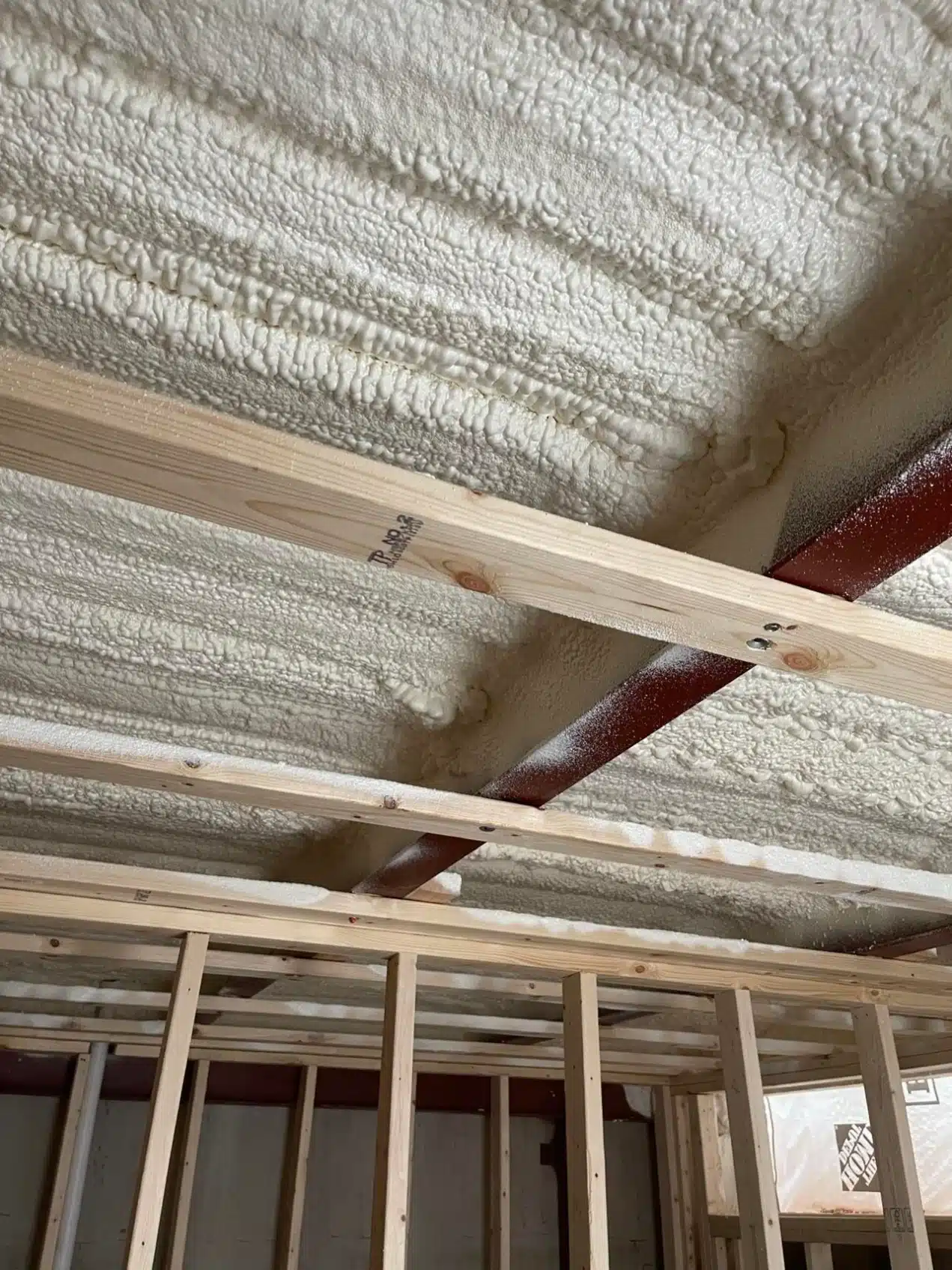
Things to Check Before Choosing Spray Foam
- Confirm if the installation area requires a thermal or ignition barrier
- Review ICC-ES or UL reports for product classification
- Assess whether closed-cell or open-cell foam is suitable for fire performance in that specific zone
- Check accessibility: Will the foam be in a space routinely entered by occupants?
Bonus Tip: Avoid using open-cell spray foam near ignition sources like recessed lighting, unless shielded.
Common Questions About Spray Foam Fire Safety Standards
Do I need a thermal or ignition barrier when using spray foam insulation?
Yes, in most cases. Spray foam must be protected with either a thermal barrier (like drywall) or an ignition barrier (like intumescent paint), depending on the location. Attics, crawl spaces, and exposed walls usually require one or both to meet code.
Is closed-cell spray foam insulation safer than open-cell in a fire?
Generally, yes. Closed-cell foam has a higher ignition temperature and tends to self-extinguish once the flame source is removed. It also produces less smoke and fewer toxic gases than open-cell foam under fire conditions.
Can spray foam insulation be installed without drywall in unfinished spaces?
Only if an approved ignition barrier is used. Building codes don’t allow exposed spray foam insulation in attics or crawl spaces unless it’s protected with a code-compliant coating or covering. Always check the ICC-ES or UL listing for installation guidelines.
Related Services Offered by Makeover Insulation
- Spray Foam Insulation: Applied in attics, walls, crawl spaces for high air-sealing and fire safety compliance.
- Insulation Removal: Safe extraction of outdated or hazardous insulation before applying compliant materials.
- Attic Insulation: Includes barrier assessment and installation for both thermal and ignition code alignment.
- Air Sealing: Reduces fire spread pathways by closing unintended air leaks.
Review the Key Details Before Moving Forward
Spray foam insulation must meet ASTM E84 fire standards and be paired with appropriate barriers depending on the location and structure. Compliance depends not just on material choice but how and where it is applied. Code adherence and proper documentation protect both the building and its occupants.
Get the Right Installation Backed by Code Compliance
For compliant, durable spray foam insulation in Georgia, contact Makeover Insulation. Every installation follows ICC, IRC, and ASTM safety protocols. Email [email protected] or call (404) 800-0300 to speak with a specialist about your space and ensure full code compliance before insulation begins.
FAQS
Do I always need a thermal barrier?
Not always. For example, when foam is applied within approved assemblies or concealed cavities, the IRC may allow exemption. Always check code specifics.
Is closed-cell spray foam safer in a fire?
Closed-cell generally performs better due to higher ignition resistance and lower smoke output. However, application quality and barrier protection remain critical.
Can I install spray foam in my attic without drywall?
Only if an ignition barrier or code-approved intumescent coating is applied over the foam. Plain exposed foam violates most building codes.
Is open-cell foam banned in any areas?
Not banned, but some jurisdictions restrict its use near ignition points or in poorly ventilated enclosed spaces without adequate protection.