
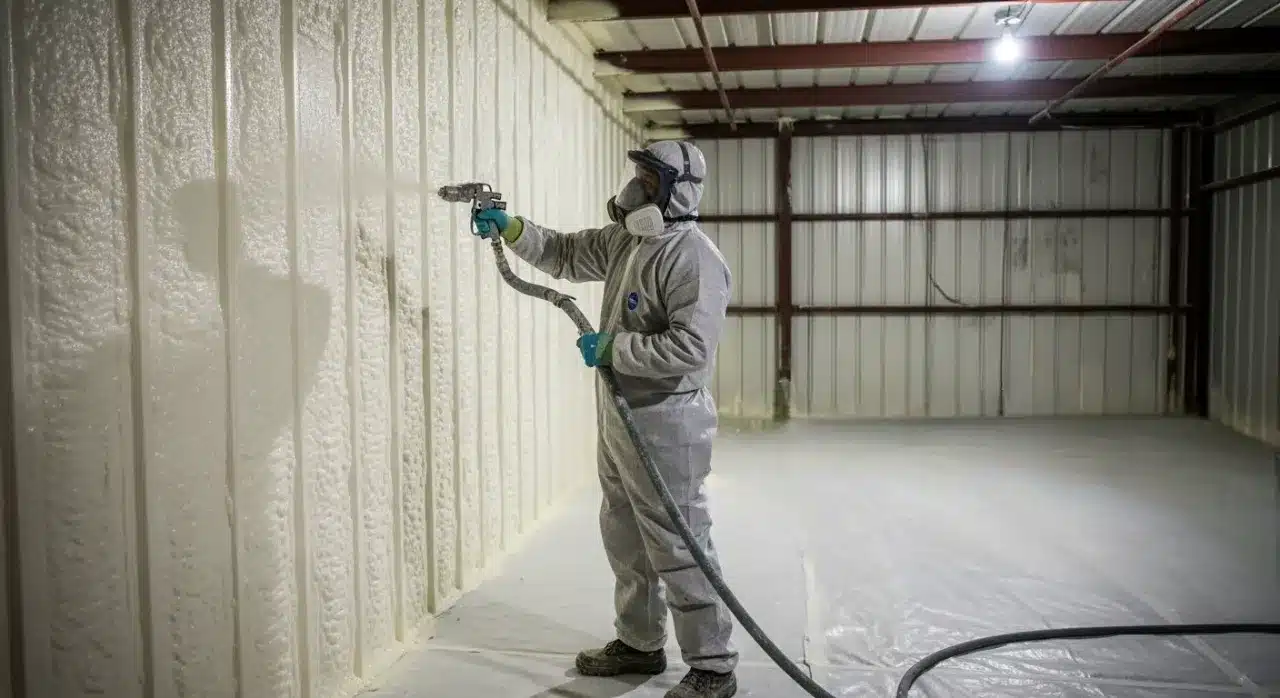
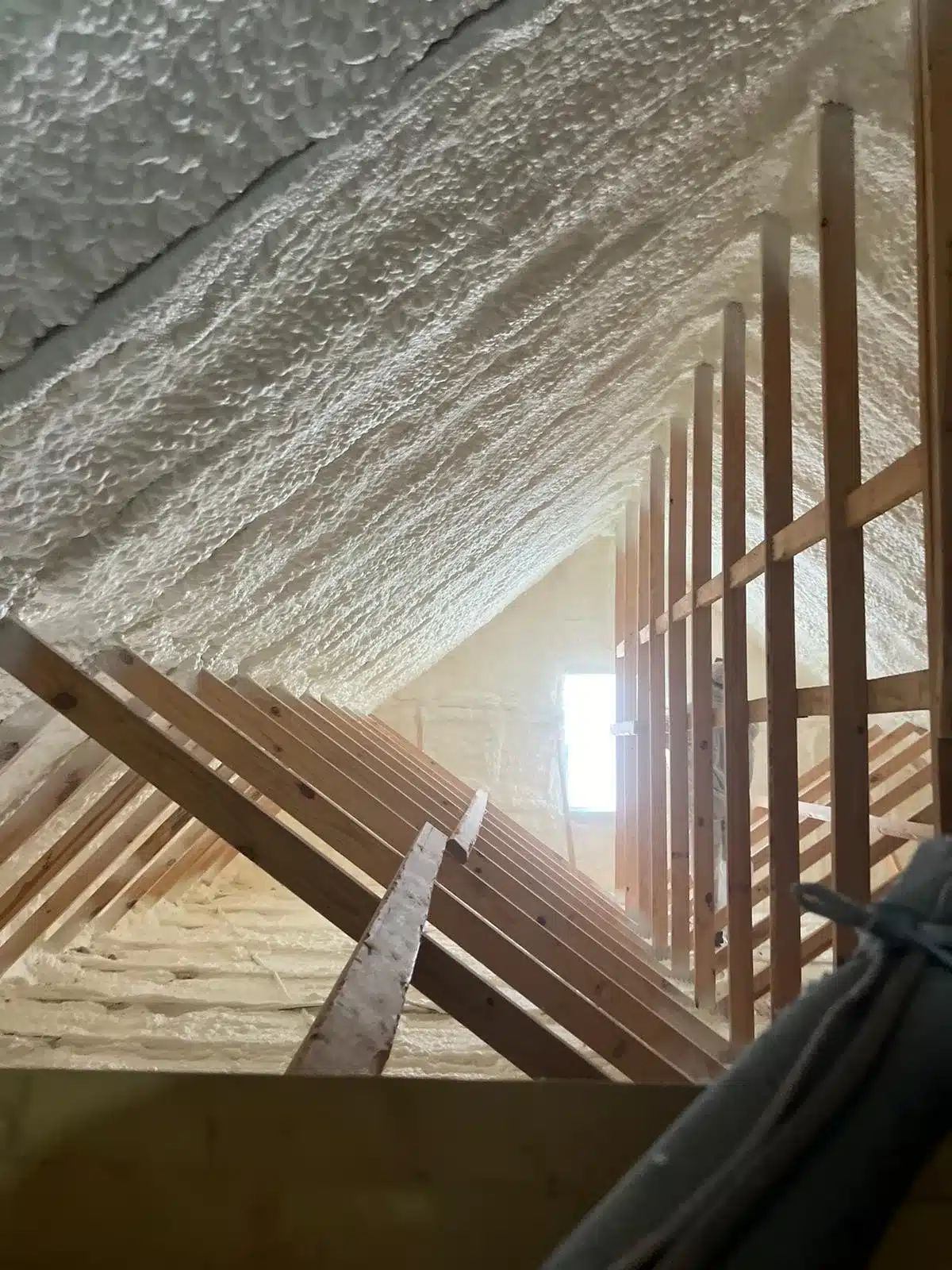
Modern spray foam insulation in Grayson, GA carries solid fire safety ratings that meet national standards, making it a reliable choice for properties. Closed-cell spray foam achieves a Class A fire rating under ASTM E84 testing, which measures flame spread and smoke development. This rating shows low flame spread, typically under 25, compared to open-cell foam’s Class A rating with higher smoke production. These ratings ensure compliance with Georgia’s building codes, which prioritize fire resistance in humid climates like Grayson’s.
This piece breaks down the ratings, types of foam, local factors, and key considerations to help property owners make informed choices. Information draws from hands-on work with installations across Georgia, where fire safety directly impacts home durability and code adherence.
Types of Spray Foam Insulation
Spray foam comes in open-cell and closed-cell varieties, each with distinct fire performance. Open-cell foam expands more during application and fills gaps easily, but it absorbs water, which can affect fire behavior in moist areas. Closed-cell foam, denser and more rigid, repels moisture and offers stronger structural support alongside better fire resistance.
In practice, open-cell suits interior walls where cost matters, while closed-cell fits attics or crawl spaces exposed to Georgia’s rainy seasons. A report from the U.S. Department of Energy notes that closed-cell foam’s higher density leads to slower fire spread in real-world tests.
Bonus Tip: During humid Grayson summers, apply closed-cell foam in unvented attics to prevent moisture buildup that could worsen fire risks from trapped heat.
Fire Safety Ratings in Detail
Fire ratings for spray foam insulation follow ASTM E84 standards, classifying materials from Class A (best) to Class C (worst). Class A means flame spread index below 25 and smoke developed under 450. Most modern spray foams hit Class A, but differences appear in smoke output—open-cell often exceeds 200 in smoke, while closed-cell stays below 50.
These tests simulate fire exposure on a Steiner tunnel, relevant for Grayson’s wood-frame homes common in suburban areas. The Spray Polyurethane Foam Alliance confirms that factory-mixed foams with fire retardants achieve these ratings without added treatments.
To illustrate these differences, consider the following comparison table:
Here’s a comparison of key ratings:
| Insulation Type | Flame Spread Index | Smoke Developed Index | Typical Use in Grayson Homes |
|---|---|---|---|
| Open-Cell Spray Foam | 5-25 (Class A) | 200-450 | Interior walls, cost-effective for mild climates |
| Closed-Cell Spray Foam | 0-25 (Class A) | 0-50 | Attics, exteriors; ideal for humidity and fire zones |
This table pulls from ASTM data, showing closed-cell’s edge in smoke control, crucial for evacuation in fire events.
Market data backs the shift: The U.S. spray foam market grew 6.5% annually from 2020-2025, driven by fire-safe options in southern states, per Grand View Research.
Grayson, GA Specifics and Climate Impact
Grayson’s humid subtropical climate brings hot, wet summers and occasional dry spells that heighten fire risks in wooded neighborhoods. Georgia adopts the International Residential Code (IRC) with amendments requiring insulation to maintain fire barriers in attics and garages. Spray foam’s ratings align well, but installers must seal penetrations to avoid voids that let flames travel.
Local fire departments report fewer structure fires with foam insulation, thanks to its sealing properties that limit oxygen flow. In 2022, Georgia saw 8,500 residential fires, many starting in attics—foam’s low spread index helps contain them, according to National Fire Protection Association data
Bonus Tip: Pair intumescent coatings with insulation in Grayson garages for extra protection against vehicle fires, a common local issue based on area service calls.
Things to Consider Before Making a Decision
Property age plays a role—older Grayson homes with outdated wiring need foam that won’t hide electrical faults. Budget for professional assessment, as improper mixing drops ratings from Class A to unrated.
Check R-value alongside fire performance; closed-cell offers R-6 per inch, better for energy savings in GA’s variable weather. Verify contractor certification through the Insulation Contractors Association of America to ensure code-compliant work.
Environmental factors like proximity to Grayson’s green spaces mean considering wildfire embers—closed-cell’s moisture resistance reduces ignition chances. Finally, weigh long-term maintenance; foam lasts 80+ years without degrading fire properties.
Bonus Tip: Test air quality post-installation in sealed Grayson basements, as foam off-gassing peaks early but ties to fire retardant stability.
Common Questions
How does spray foam compare to fiberglass for fire safety?
Fiberglass rates Class A but lacks foam’s air-sealing, allowing faster fire spread through drafts in Grayson winds.
Does humidity affect ratings?
Tests show stable performance, but saturated open-cell can smolder longer—opt for closed-cell in wet areas.
Are there rebates for fire-rated insulation in GA?
State programs through Georgia Power offer incentives for high-R, low-flame materials meeting IRC standards.
Key Takeaways
Closed-cell spray foam stands out for Grayson properties with its superior fire ratings and moisture handling. Understand types, local codes, and installation factors to choose wisely. Evaluate your home’s layout, climate exposure, and budget to match needs with long-term safety goals.
Next Steps for Grayson Property Owners
Review your current insulation against Georgia codes and consider a site assessment. Contact Makeover Insulation at [email protected] or (404) 800-0300 for guidance on fire-rated options suited to local conditions. This step ensures choices fit specific property demands without guesswork.
Sources
- U.S. Department of Energy – Government resource on insulation types and performance, including fire safety details.
- Spray Polyurethane Foam Alliance – Industry group providing data on foam fire ratings and testing standards.
- Grand View Research – Market analysis report on spray foam growth and regional trends in the U.S.
Frequently Asked Questions
Does spray foam meet Georgia’s fire codes for new builds?
Yes, both types comply if installed per IRC Section R316, which mandates thermal barriers like gypsum over foam in living spaces. Grayson inspectors enforce this strictly for attics.
Can spray foam increase fire risk if not installed right?
Poor application creates gaps that accelerate spread, turning a Class A material ineffective. Certified crews use proper thickness to maintain ratings.
How long do fire ratings last on spray foam?
Ratings hold for the material’s life, over 50 years, as long as no physical damage occurs. Annual inspections in Grayson catch issues early.
Is open-cell foam safe for bedrooms in humid climates?
It works with a thermal barrier, but closed-cell provides better moisture and fire control for Grayson’s high humidity levels.
What tests prove spray foam’s fire resistance?
ASTM E84 covers surface burning, while NFPA 286 assesses room fire growth—both show foam performs well when intact.