
Investing in blown-in insulation guides for properties in Norcross, Georgia, delivers significant long-term advantages that go far beyond a simple temperature adjustment. The most immediate and noticeable benefit is a substantial reduction in energy costs, as the seamless thermal barrier prevents heat from escaping in the winter and entering in the summer. This leads to lower utility bills year after year. Other lasting benefits include more consistent indoor temperatures, improved indoor air quality by reducing allergen infiltration, and a quieter home environment due to its sound-dampening properties.
This article provides a detailed look at how blown-in insulation performs as a long-term investment for your property. The information is based on extensive field experience and building science principles, offering a clear picture of what homeowners can expect. By understanding these benefits, you can make a more informed decision about your home’s thermal efficiency.
Substantial Energy Savings Over Time
The primary financial benefit of upgrading insulation is the consistent reduction in energy consumption. Blown-in insulation excels at filling gaps, crevices, and tight spaces around wiring and plumbing, creating a monolithic layer of protection. This comprehensive coverage minimizes thermal bridging, which is heat’s tendency to bypass insulation through framing studs. A home with a complete thermal envelope requires less energy to heat and cool, directly lowering monthly utility bills.
According to the U.S. Department of Energy, homeowners can save an average of 15% on heating and cooling costs by air sealing their homes and adding insulation in attics, crawl spaces, and rim joists. For the Norcross climate, achieving the recommended R-value is key to maximizing these savings. Proper insulation lightens the workload on your HVAC system, which can also extend its operational life and reduce repair expenses.
Bonus Tip: Before adding new insulation, it’s a good practice to perform air sealing. Sealing cracks and gaps in the attic floor, around light fixtures, and plumbing vents stops conditioned air from leaking out, allowing the new insulation to perform at its peak efficiency.
Consistent Home Comfort and Noise Reduction
Beyond savings, properly installed blown-in insulation makes a home much more comfortable. It effectively eliminates the hot and cold spots that often plague rooms with inadequate insulation. By slowing heat transfer, it keeps living spaces warmer in the winter and cooler during the hot Georgia summers, maintaining a stable temperature throughout the house.
An often-overlooked advantage is its acoustic performance. The density of blown-in materials like fiberglass or cellulose is excellent for dampening sound. This means less noise from outside, such as traffic or neighbors, and a reduction in sound traveling between floors and rooms within the home. This creates a quieter, more peaceful living environment.
A Healthier Indoor Environment
The air quality inside a home is directly affected by how well it’s sealed and insulated. Blown-in insulation forms a tight barrier that helps block the infiltration of outdoor allergens, dust, and pollutants. This is particularly beneficial for individuals with allergies or respiratory sensitivities.
Furthermore, by helping to control temperature and moisture, insulation plays a part in preventing mold and mildew growth. When warm, moist air comes into contact with a cold surface, condensation can form, creating an environment for mold. Insulation keeps interior surfaces warmer, reducing the likelihood of condensation. The U.S. Environmental Protection Agency notes that controlling moisture is a critical step in preventing mold in homes, and proper insulation is a key component of that strategy.
Comparing Blown-In to Other Insulation Types
Choosing the right insulation depends on the application, budget, and performance goals. Blown-in insulation is often compared to traditional batts and modern spray foam insulation in Norcross, GA. Each has its place, but blown-in offers a balanced profile for attic retrofits.
| Feature | Blown-In (Fiberglass/Cellulose) | Fiberglass Batts | Open-Cell Spray Foam |
|---|---|---|---|
| Installation | Fills irregular spaces easily | Best for standard stud cavities | Creates an air-tight seal |
| R-Value per Inch | 2.2 – 3.8 | 2.9 – 3.8 | 3.5 – 3.8 |
| Air Sealing | Good; conforms to spaces | Poor; gaps are common | Excellent; expands to seal |
| Cost | Moderate | Low to Moderate | High |
| Best Use Case | Attic floors, existing walls | New construction, open walls | Attics, walls, rim joists |
Things to Consider Before Making a Decision
Before committing to an insulation project, several factors need careful evaluation to ensure a successful outcome.
Current Insulation Levels
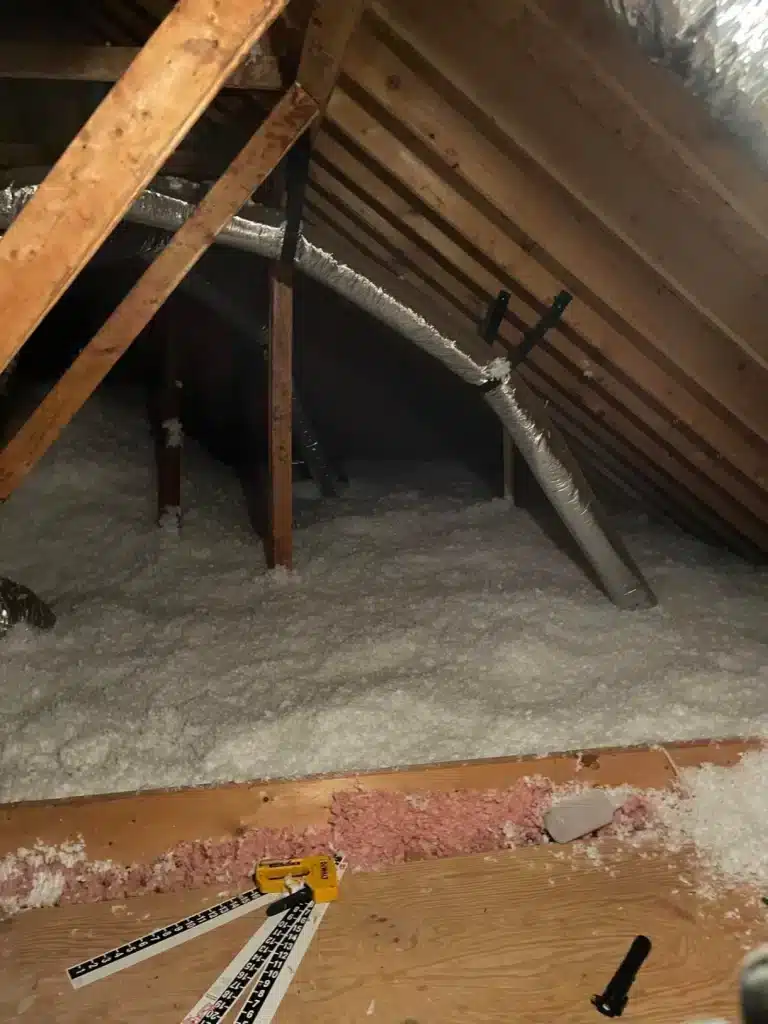
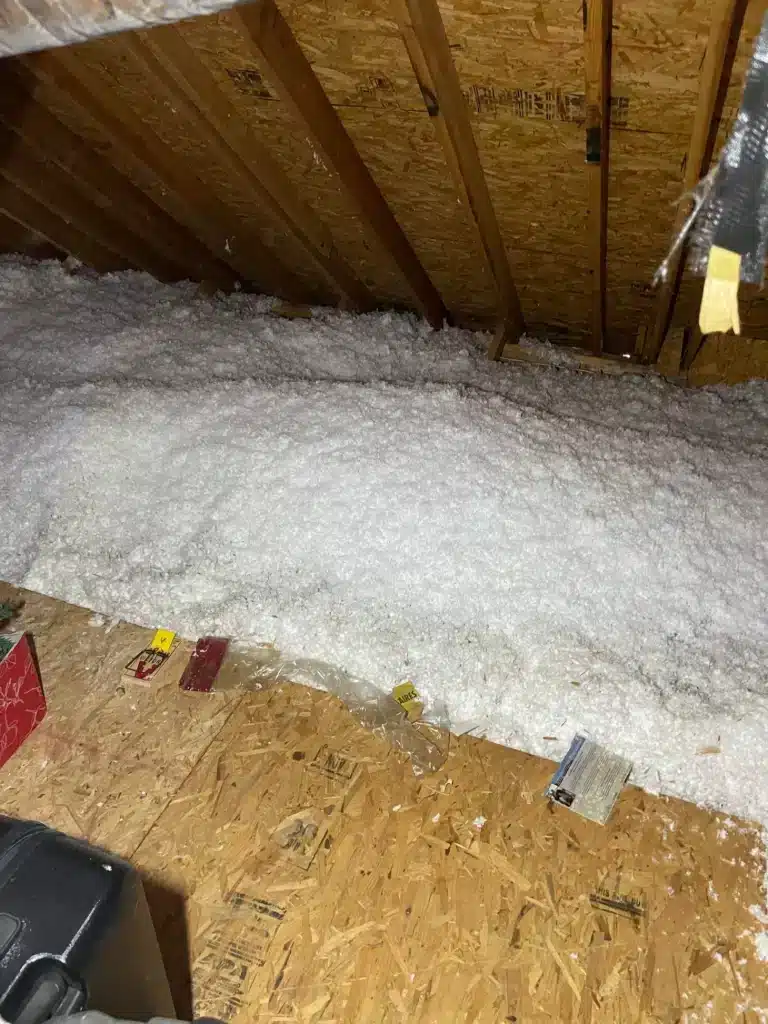
The first step is to assess what you already have. You can measure the depth of your existing attic insulation with a ruler. For the Norcross area (Climate Zone 3), modern recommendations often call for an R-value between R38 and R60 in the attic. If your current insulation is below 12 inches, you will likely benefit from adding more.
Attic and Wall Structure
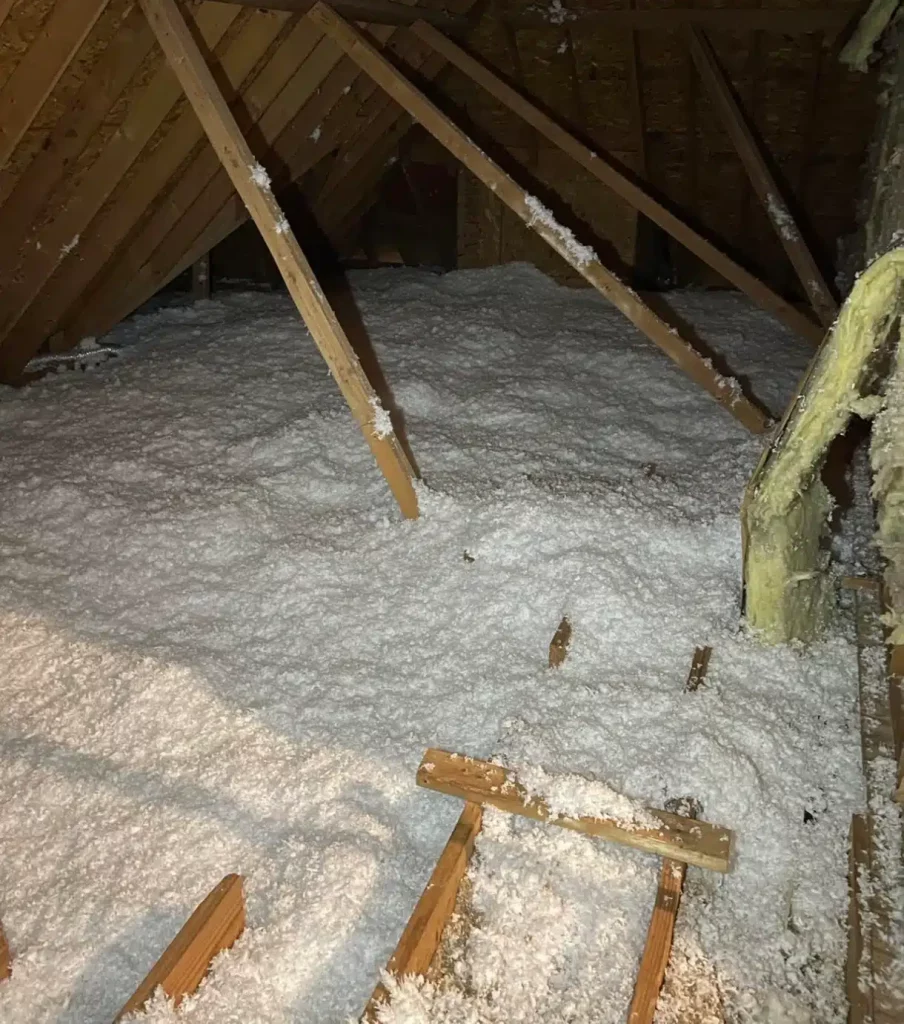
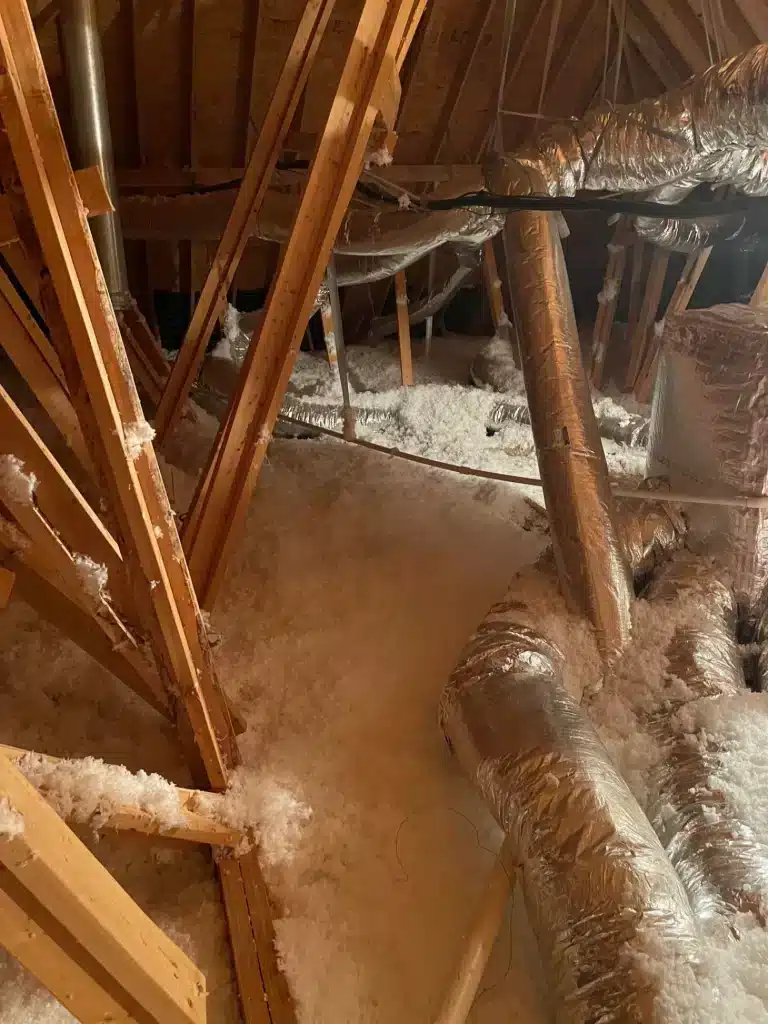
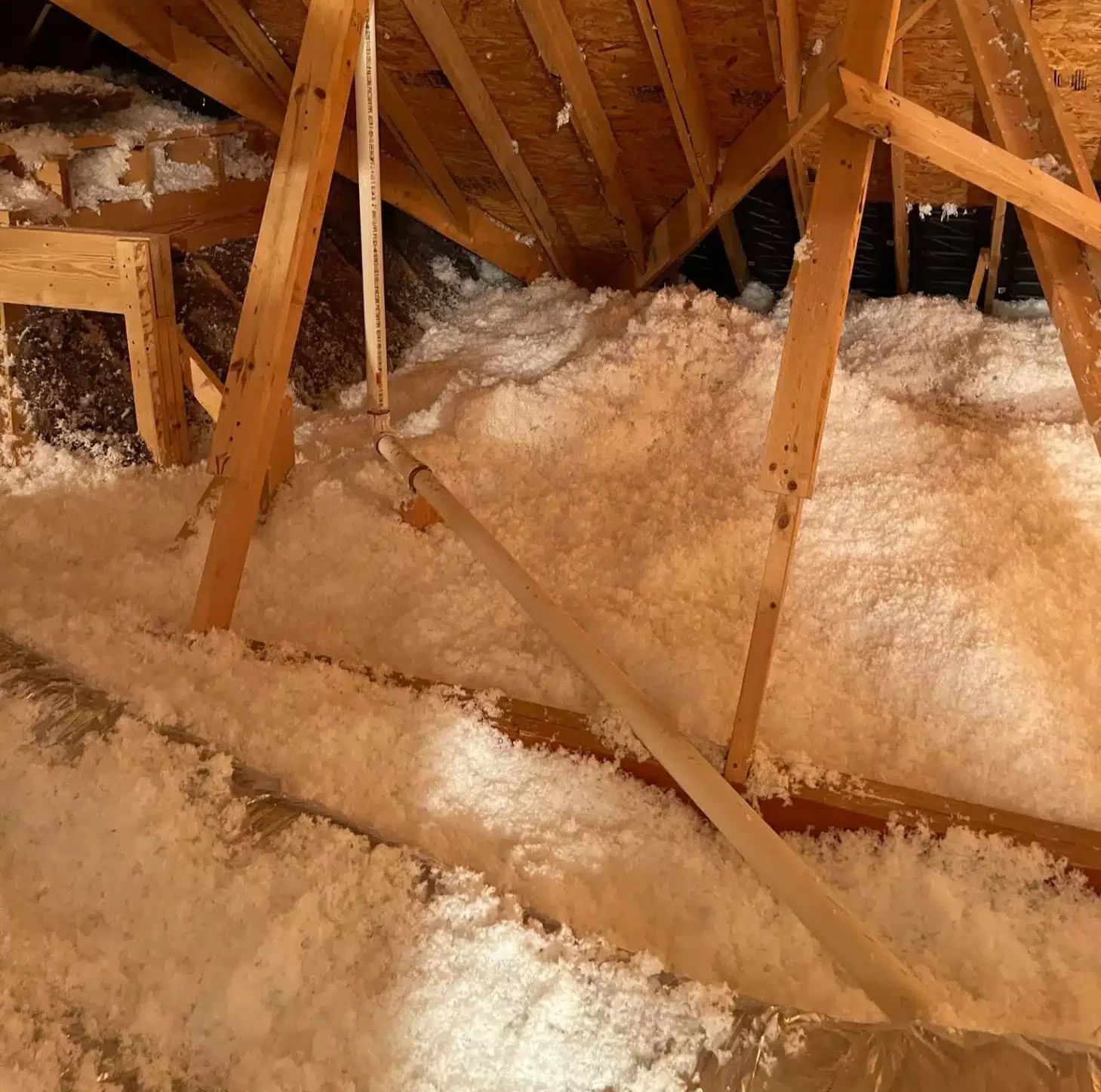
Consider the accessibility of the areas to be insulated. Blown-in insulation in Norcross, GA is ideal for attics with irregular joist spacing, numerous obstructions, or low-clearance areas where rolling out batts would be difficult. It’s also used for insulating existing walls through a “drill-and-fill” method.
Bonus Tip: Check for any available local or federal rebates for home energy efficiency improvements. Programs like those highlighted by ENERGY STAR can sometimes help offset the initial cost of upgrading your insulation.
Material Choice
The two main types of blown-in insulation are fiberglass and cellulose. Fiberglass is lightweight, naturally moisture-resistant, and non-combustible. Cellulose is made from recycled paper treated for fire resistance and is known for its dense packing, which can be effective at blocking airflow. The choice between them often comes down to specific project needs and budget.
Final Thoughts
Investing in blown-in insulation is a practical, long-term improvement for any Norcross home. The benefits of lower energy bills, improved year-round comfort, better air quality, and a quieter home accumulate over time, offering a strong return. Before moving forward, it’s always best to evaluate your home’s current state and long-term efficiency goals to make the most effective decision.
Get a Professional Assessment
To understand the specific needs of your home, a professional evaluation is the best next step. For a detailed inspection and quote, you can contact Makeover Insulation LLC. Reach out by phone at (404) 800-0300 or send an email to [email protected] to discuss your project.
Sources
- U.S. Department of Energy – Provides official recommendations and savings estimates for home insulation and air sealing projects.
- U.S. Environmental Protection Agency – Offers guidance on controlling moisture and preventing mold growth in homes, where insulation is a factor.
- ENERGY STAR – A federal program that provides information on tax credits and rebates available for energy-efficient home improvements.
Frequently Asked Questions About Blown-In Insulation
How long does blown-in insulation last?
Blown-in fiberglass and cellulose insulation are designed to last for the life of the home. They do not decay or break down under normal conditions. However, performance can be compromised by moisture damage or physical compaction.
Is the installation process messy?
When handled by professionals, the process is contained and clean. Technicians use specialized equipment to blow the insulation through hoses directly into the attic or wall cavity, minimizing dust and debris in the living areas of the home.
What R-value is recommended for attics in Norcross, GA?
For Norcross and the greater Atlanta area (Climate Zone 3), the U.S. Department of Energy recommends an attic R-value ranging from R38 to R60. This typically translates to about 12 to 18 inches of blown-in insulation, depending on the material used.
Can blown-in insulation be installed over existing insulation?
Yes, in most cases. If the existing insulation is dry and in good condition (not moldy or compacted), new blown-in insulation can be installed directly on top of it. This is a cost-effective way to bring your home’s total R-value up to current standards.
Does blown-in insulation settle over time?
Cellulose insulation can settle by about 20% after installation, which professional installers account for by installing it at a greater initial depth. Blown-in fiberglass has very low settlement rates and generally maintains its installed R-value over time.
Is cellulose or fiberglass blown-in insulation better?
Both are excellent products. Fiberglass offers superior moisture resistance, while cellulose provides a slightly higher R-value per inch and is made from a high percentage of recycled materials. The best choice depends on the specific conditions of your attic and your budget.
How does insulation affect my HVAC system’s lifespan?
By reducing the amount of heat transfer, proper insulation means your heating and cooling system doesn’t have to work as hard or run as long to maintain the desired temperature. This reduced strain can lead to fewer breakdowns and a longer operational life for the equipment.